
How Are Pressure Vessels Fabricated? A Step-by-Step Guide
How Pressure Vessels Are Fabricated
How are pressure vessels fabricated? Fabricating pressure vessels involves far more than simply welding metal sheets together. These critical components are engineered to withstand internal or external pressure safely, often in demanding industrial conditions. According to Red River, an ASME-certified manufacturer, meticulous planning and rigorous quality checks ensure every vessel meets strict code requirements. Let’s break down a clear step-by-step process to see how each phase contributes to safety, durability, and cost efficiency.
Step 1: Develop a solid design
Your journey begins with design. Engineers calculate volume, pressure ranges, and service temperatures, then select appropriate standards. Many designs follow ASME guidelines, which require specific thicknesses based on the vessel’s intended pressure. At this stage, you may decide on specialized features, such as internal linings for corrosion control or customized nozzles for better flow. If you want more details on the overall approach, explore our pressure vessel fabrication resource.
Step 2: Choose quality materials
Selecting materials is crucial. Carbon steel, stainless steel, or specialty alloys factor into your vessel’s temperature range and resistance needs. Many stainless steel pressure vessel manufacturers prefer stainless steel for corrosion resistance and longevity. A quality vessel manufacturer verifies full traceability of these materials, documenting each component from the mill to the shop floor so you know exactly what you’re getting.
Step 3: Form and shape the components
Next comes the shaping of shells, heads, and other parts. Manufacturers roll steel plates or spin metal to form domed ends. Maintaining tight tolerances is vital. Skilled operators ensure each cylinder or head matches design specs. The result is a uniform shape that stands up to stress and prevents weak spots from forming along weld lines.
Step 4: Weld and assemble
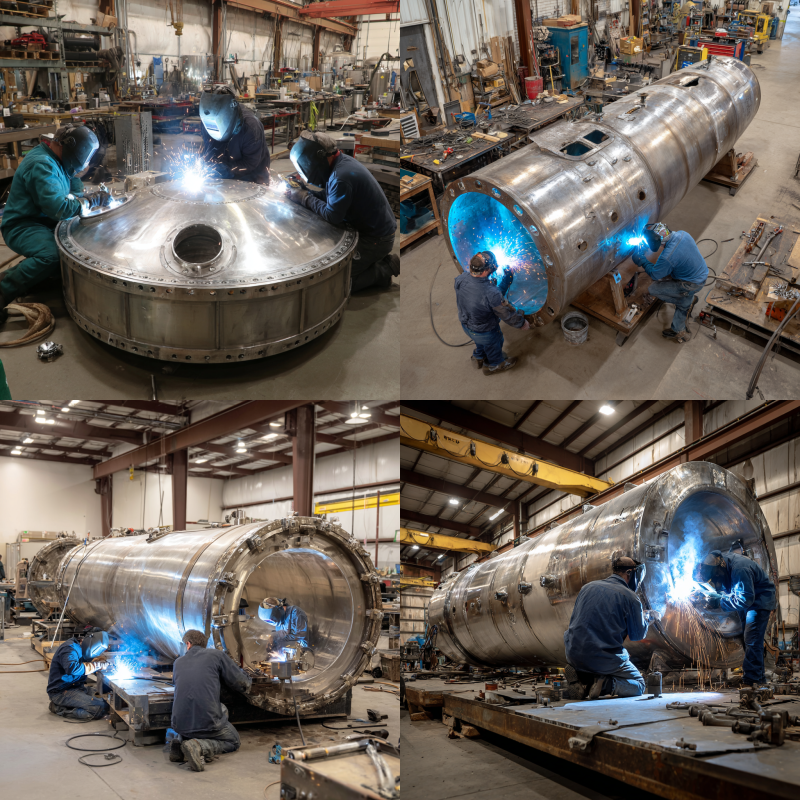
After forming, welding joins the vessel’s parts. ASME pressure vessel manufacturers often use processes like TIG, MIG, or submerged-arc welding, depending on material and thickness. Because welds are potential failure points, a thorough inspection follows each pass. This includes visual checks and non-destructive tests like X-ray or ultrasonic scans. A stable weld equals a safer vessel.
Step 5: Conduct rigorous testing
Pressure testing ensures your fabricated vessel meets specifications. Common methods include hydrostatic testing, where water pressure is steadily increased to check for leaks or deformities. According to Red River, quality control can also include pneumatic testing or stress analysis. This thorough approach confirms that every seam, joint, and component functions just as designed.
Step 6: Apply final finishes and accessories
In the last phase, you often see coatings, insulation, or instrumentation. Some clients want a bare-bones vessel, while others need a climate-controlled enclosure with advanced sensors. Coatings, from simple paint to specialized anti-corrosion layers, protect your vessel’s exterior. Whatever the specification, the final result should be a turnkey solution ready for your facility.
Why prefabrication matters
Prefabrication shifts major fabrication tasks to a controlled shop environment. Red River emphasizes that this approach generates reliable quality, faster turnaround, and reduced on-site hours. By kitting materials in advance, you minimize shipping errors and keep labor safe. Prefabricating vessels can also cut overall construction costs because work continues regardless of weather conditions. If you need more detail on the benefits of this method, see our article on pressure vessel manufacturing.
How Are Pressure Vessels Fabricated Effectively
So, how are pressure vessels fabricated with maximum safety and efficiency? It requires:
- Careful engineering
- Traceable, high-grade materials
- Skilled welding
- Non-destructive testing
- Smart prefabrication techniques
Whether for energy, chemical, or industrial use, a well-fabricated vessel reduces downtime, improves performance, and protects your workforce. Red River’s proven track record in ASME fabrication ensures your vessel meets every requirement from concept to commissioning.
How Are Pressure Vessels Fabricated for Safety and Reliability
Understanding how are pressure vessels fabricated highlights the precision, safety, and expertise required to build equipment that can withstand extreme conditions. From engineering design and material selection to rigorous ASME code compliance and testing, every step in the process ensures reliability and long-term performance. By partnering with trusted manufacturers, businesses in energy, chemical processing, and heavy industry can secure vessels that deliver both safety and cost efficiency for years to come.
Need a Reliable Pressure Vessel Fabrication Partner?
Avoid costly errors and ensure code compliance by partnering with experts in pressure vessel fabrication inside and out. Red River specializes in designing and manufacturing ASME-certified pressure vessels, along with prefabricated spools and skid packages. Start your project with confidence and experience the Red River difference where American-made quality and American values come together. Contact us today.
Frequently Asked Questions
What is pressure vessel fabrication?
Pressure vessel fabrication is the process of designing, engineering, and manufacturing containers that safely hold gases or liquids under pressure. At Red River, we follow ASME standards to ensure each vessel delivers maximum safety, performance, and compliance.
How are pressure vessels fabricated?
We fabricate pressure vessels through a proven process: detailed design, material selection, precision forming, certified welding, and rigorous testing. Every Red River vessel is built in a controlled environment to guarantee quality and code compliance.
What materials are used in pressure vessel fabrication?
Red River uses high-grade carbon steel, stainless steel, and specialty alloys such as Inconel and Hastelloy. Material choice depends on the vessel’s pressure, temperature, and corrosion resistance requirements.
Do all manufacturers handle custom vessels?
Some do, but not all. Specialized vessel manufacturers like Red River often tailor designs to unique pressure, temperature, and space requirements.
How long does fabrication usually take?
It depends on complexity and material availability. A straightforward build might be ready in a few weeks, but intricate projects can take much longer.
Are inspections required after install?
Yes. Regular inspections detect issues early. Detailed guidelines for testing frequency can be found through ASME or in our “what is pressure vessel manufacturing inspection” post.
Key takeaways
- Detailed engineering is the foundation of a reliable pressure vessel.
- Material selection drives durability and safety performance.
- Skilled welding and thorough testing ensure you meet strict ASME standards.
- Prefabrication can lower overall costs and cut on-site risks.
- Partnering with accredited, experienced fabricators safeguards product quality.
Related Blog Post
Marine-Grade vs Standard Stainless Steel

Pros and Cons of Vertical Integration

How to Dry Desiccant Properly and Regain Its Effectiveness

Why Do Gas Turbines Need Fuel Water Separator Vessels, Red River


