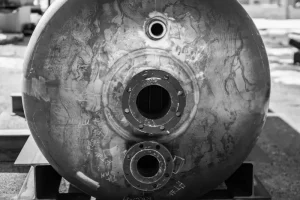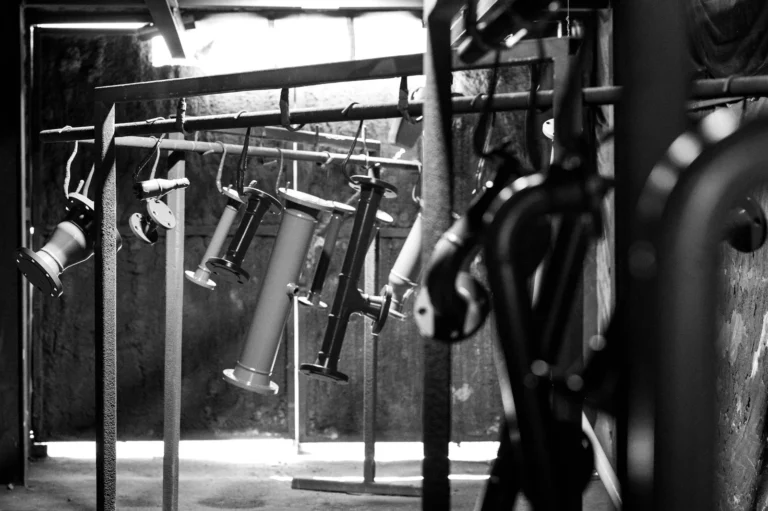
Our team stands by principals that have been the backbone of American industry since the beginning.

We’re not just meeting industry standards; we’re setting them. Let us show you the Red River difference.

Our team is equipped with the knowledge and tools to deliver products that stand the test of time.
We are here to bring back American Manufacturing with its quality, culture and the appreciation it deserves. We believe American Manufacturing is a big part of what made America what it is and we look to a future full of opportunity, industry, innovation and fulfillment.
We believe that every family should be able to live comfortably on a single stream of income and that what each of us do every day takes us one step closer to that or one step further away. Everything we do is governed by American Values and the critical question of whether it will improve our future. Not just for us but for generations to come. When you receive a pressure vessel from Red River you are receiving the work of Blue Collar Craftsmen and Women who care deeply about building the future of America. We are serious about building strategic partnerships and relentlessly improving every day.
With extensive experience in multiple industries, Red River has evolved as a trusted name in pressure vessel manufacturing. Our reputation is built on a foundation of trust, commitment, ownership and a desire to build long term valuable relationships.

The water business is rapidly evolving with demand growing every day. We aim to be the best in the business for pressure vessels whether it’s filtration, media beds, storage and other treatment processes. We can provide the best lead times and quality needed for water treatment processes whether code or non-code tanks and vessels are needed. We work with water treatment solution providers nationwide who focus on providing the complete system. With all the complex parts and regulatory requirements of designing and implementing a water treatment system that meets current standards we bring value to our clients by providing reliable quality and lead times.
We provide pressure vessels to some of the worlds leading solution providers when it comes to air. The air industry is competitive and plaques with delays, poor quality and poor service. Whether it’s cyclonic filtration, dehydration, media bed or simple air receivers, the professionals rely on Red River to deliver quality and timing to meet their commitments. They have the confidence that we will do what it takes and when revenues are on the line results matter.
Handling gasses always requires pressure vessels for scrubbing, dehydration, storage and other processes. Whether it’s Renewable Natural Gas, propane, helium or flare gas, we’ve got experience with almost all of it, we have a library of designs to pull from and we are always growing our experience. With the ever advancing technology surrounding energy we are partnering with industry leading companies to create real value.
This is where Red River got its start. Over the years we’ve designed and built multi phase separators, knock outs, treaters, scrubbers and many other pressure vessels for some of the worlds leading oil and gas providers. We have a stellar track record for the best delivery times, quality and accountability.
NBBI R STAMP

Member of American
Welding Society (AWS)
ASME Certified and
carry U4 & R stamps

Our process begins with understanding your needs. Understanding the intended use of your pressure vessel, parameters, constraints, regulatory standards and environmental conditions are imperative to delivering a superior product.
We leverage our specialized software and experienced people to draft designs that are both efficient and compliant with industry standards. Our design process includes obtaining client approval of designs prior to production. We will make sure every detail is clearly illustrated and objectives are clear.
With a keen eye on quality, our manufacturing process is a blend of precise craftsmanship and technological advantages combined to produce a product that will meet your needs.
Before leaving our facility every pressure vessel undergoes our Quality Control process, is approved by an ASME Authorized Inspector to ensure it meets all applicable quality standards.
All Quality Control & Material Tracing documentation is provided with each and every pressure vessel delivered to our clients.
We rarely miss a delivery date and our lead times are among the best in the industry.
The user must be an administrator, editor, or moderator of the page in order to impersonate it. If the page business requires Two Factor Authentication, the user also needs to enable Two Factor Authentication.
We place great value on the feedback we receive from our clients and we are continually improving our processes based on the feedback we get. Almost everyone on our team has Lean Sig Sigma training and everyone at every level is engaged in regular continuous improvement activities. This relates to how we design your pressure vessels as well, we can integrate LSS principles into pressure vessel designs.
When you choose Red River Team, you’re not just selecting a pressure vessel manufacturer. You’re partnering with a team that values integrity, dedication, and craftsmanship. Let’s embark on a journey of excellence together. Contact us today to learn more about our pressure vessel manufacturing capabilities and how we can serve your needs.
We do our best to have every quote turned around in the shortest amount of time possible, our lead times are among the best in the industry and we rarely miss a delivery date. We provide regular production updates to our clients so you aren’t left wondering when you will receive or order. Our goal is to help you deliver better product, faster.
Quality is at the core of our operations. We carry current ASME and NBBI certifications, and meet or beat those standards. Our pressure vessels aren’t just built to perform they way you need them to, they are built to last. Every pressure vessel is delivered with all appropriate documents verifying that it was built to the proper standards with the correct materials. Everyone on our team has the authority to reject or stop work based on a quality issue.
Can’t find what you need in the catalog? Let’s design it. We collaborate closely with clients to ensure we manufacture pressure vessels that will perfectly fit your needs. We have the proper expertise to design custom pressure vessels around your unique parameters.