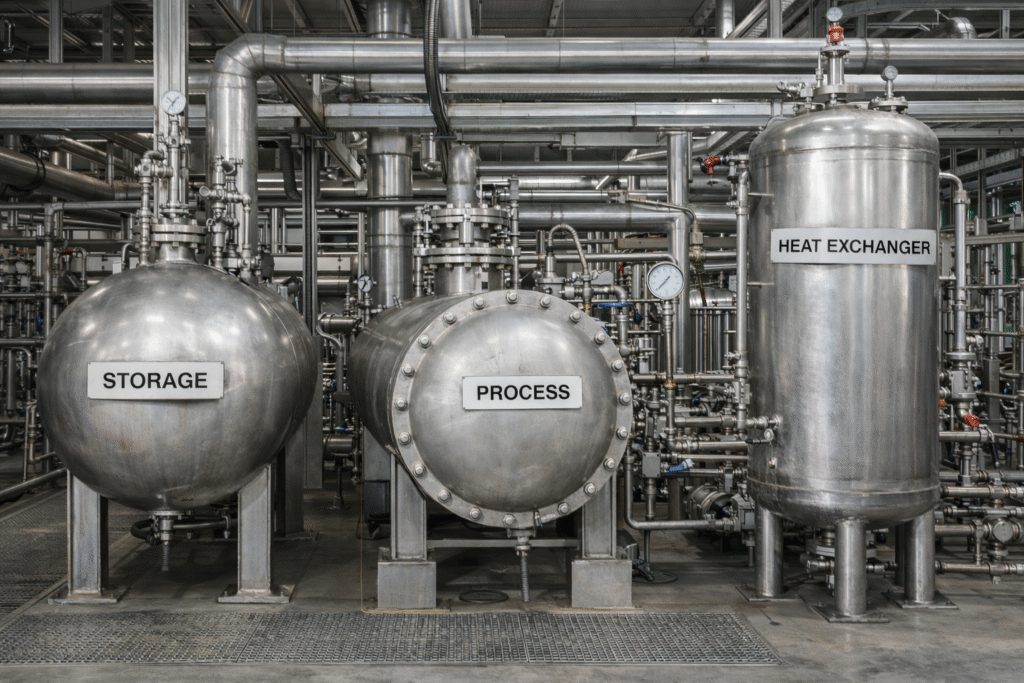
Pressure vessels hold fluids/gases under pressure. Types vary by wall thickness (thin/thick), shape (cylindrical/spherical, vertical/horizontal), and use (storage, process, boilers, heat exchangers, distillation, reactors). Choose the right material, follow ASME/EU codes, and maintain with regular inspections.
Explore types of pressure vessels
Pressure vessels are essential for storing, processing, or transporting fluids and gases under pressures higher than atmospheric levels. From simple compressed-air cylinders to advanced chemical reactors, pressure vessels ensure safe operations in industrial, commercial, and domestic settings. Understanding the different types of pressure vessels helps you select the right solution for your application. For a gentle introduction, see what is a pressure vessel.
Compare thin and thick walls
When thin-walled makes sense
Thin-walled vessels assume relatively uniform stress throughout the shell, simplifying design and lowering costs. Common examples include cylindrical storage tanks and boilers for moderate pressures. You’ll find these widely used in refineries, hotels, and factories. For design guidelines, reference the ASME pressure vessel code, which includes formulas for hoop and longitudinal stress calculations.
Why some vessels need thick walls
Thick-walled vessels are essential for high-pressure applications where stress varies from the inner to outer surfaces. High-stress pressure vessels require specialized calculations to maintain safety margins and operational integrity. Examples include autoclaves and vessels used in high-pressure chemical reactions.
Choose your vessel shape
Pressure vessels come in multiple shapes, each shape designed to withstand internal stresses and support specific functions. You have likely seen the classic cylindrical tanks sitting horizontally or vertically, but there are also spherical vessels that handle ultra-high pressure more uniformly. When exploring types of pressure vessels, geometry plays a critical role in performance. If you are curious about how these compare to atmospheric tanks, you might check out what is the difference between a pressure vessel and a tank to see those distinctions more clearly.
Spherical design
Spherical vessels distribute pressure evenly, reducing stress concentrations. This allows thinner walls than cylindrical designs at the same pressure. Spheres are often used for liquefied petroleum gas storage.
Cylindrical design
Cylindrical vessels are easier to manufacture and transport but experience higher hoop stress. They are widely used in steam boilers, reactors, and general chemical processing.
Vertical vs. horizontal orientation
Vertical vessels save floor space and are ideal for process applications, while horizontal vessels suit heat exchangers and large-volume storage.
Use specific vessel applications
Once you decide on a wall thickness category and a shape, you need to match the vessel to its operational purpose. Many of these categories overlap, but classification by function can help you narrow down the right fit. If you want to see an expanded discussion of these categories, check out what are the different types of pressure vessels. Below are some of the most common categories you will see in industrial settings.
Storage vessels
Storage vessels hold gases, liquids, or vapors safely for later use. Industries like food and beverage, pharmaceuticals, and petrochemicals rely heavily on these vessels.
Process vessels
Process vessels include reactors, mixing tanks, or fractionation units with features like baffles or mixers. They manage temperature and pressure changes during chemical transformations.
Heat exchangers
Heat exchangers transfer heat between fluids without mixing, improving process efficiency in power generation and wastewater systems.
Boilers
Boilers generate steam or hot water for energy, withstanding extreme pressure and temperature.
Distillation Columns
Distillation columns separate liquid mixtures by boiling points, critical in refineries.
Reactors
Chemical reactors facilitate controlled reactions under pressure, vital in pharmaceutical and petrochemical industries.
Pick the right materials
Selecting a suitable material for your pressure vessel is crucial for safe operation and longevity. If you want more insight, you can explore pressure vessel materials or see what materials are used in types of pressure vessels. Many factors influence your decision, such as temperature ranges, corrosion potential, cost, and compliance with industry requirements. Understanding the materials used in various types of pressure vessels helps ensure the right match for performance and safety.
Metals: Steel and beyond
Carbon steel is cost-effective, while stainless steel offers corrosion resistance and hygienic surfaces.
Fiber-reinforced plastics (FRPs)
FRPs, including carbon fiber, provide lightweight, corrosion-resistant options for aerospace, defense, and automotive applications.
Balancing performance and cost
Material selection balances strength, weight, cost, and environmental factors, ensuring vessels meet performance requirements safely.
Adhere to regulations and codes
Safety and legal compliance are top priorities when it comes to pressure vessels. Regulatory bodies define rules to reduce the risk of catastrophic failures. In the United States, the ASME Boiler and Pressure Vessel Code is the dominant standard. Its various sections cover power boilers, heating boilers, and nuclear facility components. Section VIII specifically addresses the design and fabrication of pressure vessels operating above 15 psi. This applies across many types of pressure vessels found in industrial and commercial use. If you would like an overview, here is what are pressure vessel codes for a quick read.
European directives
The PED, TPED, and SPVD ensure vessels meet EU safety requirements.
Germany’s AD 2000 code
AD 2000 provides additional compliance standards for vessels sold in Germany.
Maintain for safety and efficiency
Regular inspection, cleaning, and repairs prevent failures. Non-destructive testing methods like ultrasonic or radiographic tests detect cracks or thinning. Protective coatings, repairs, and adherence to pressure vessel maintenance practices extend operational life.
Inspection schedules
Your inspection frequency depends on factors like operating pressure, the contents, material type, and regulatory guidelines. ASME references typically recommend periodic internal and external inspections, while the how often should a pressure vessel be inspected link can provide more specifics.
Protective coatings and repairs
Recurring corrosion or mechanical damage can drastically reduce a vessel’s safe operating life. Proper coatings or claddings can delay wear on metals exposed to corrosive fluids. Composite vessels might need inspections for fiber degradation or matrix delamination. If you discover issues, quick repairs with specialized welding or patching methods help return the vessel to safe condition.
Types of Pressure Vessels
You have seen how pressure vessels vary in thickness, shape, size, and complexity. By understanding these factors, you can better match your application’s needs, whether you are handling superheated steam in a power plant, mixing chemicals in a reactor vessel, or storing compressed air at moderate pressure. The essential takeaway is this: each category of pressure vessel offers unique advantages, and you can pick one that fits your performance and budget constraints.
Need a reliable partner?
Red River specializes in the design and manufacturing of pressure vessels. We also fabricate related items such as prefabricated spools and skid packages.
Reach out to us today and experience the Red River difference. Where American-made products and American Values come together, we care more.
Frequently Asked Questions
1. What is a pressure vessel?
A pressure vessel is a closed container designed to hold gases or liquids at pressures significantly different from atmospheric pressure (typically above 15 psi). These engineered vessels feature specific wall thickness, materials, and safety components to prevent failure. Common examples include boilers, air compressor tanks, propane cylinders, and autoclaves. All pressure vessels must comply with safety codes like ASME standards.
2. What are the different types of pressure vessels?
Pressure vessels are classified by:
Shape: Cylindrical (most common), spherical (high-pressure applications), and rectangular
Pressure type: Internal pressure vessels (containing pressurized contents) and external pressure vessels (withstanding vacuum/external pressure)
Application: Storage vessels, heat exchangers, process vessels, and steam boilers
Material: Carbon steel (standard), stainless steel (corrosive environments), and composite materials (lightweight applications)
3. What is the difference between a pressure vessel and a tank?
Pressure vessels operate above atmospheric pressure, require strict engineering codes, specialized safety components, and regular inspections. They’re more expensive due to safety requirements.
Tanks typically operate at atmospheric pressure, have simpler construction, fewer regulations, and lower costs. The key distinction is operating pressure tanks become pressure vessels when designed for pressurized operation, triggering pressure vessel codes and safety requirements.
4. Can composite vessels handle extremely high pressures?
Yes, modern fiber-reinforced plastics, including carbon fiber or aramid, can be extremely strong. They often excel in aerospace or specialized industrial applications due to their high strength-to-weight ratio.
5. Which codes apply if I operate in multiple regions?
In the US, you will likely use the ASME Boiler and Pressure Vessel Code. In Europe, you will look at the Pressure Equipment Directive (PED) and possibly AD 2000 for Germany.
6. How often should I check my pressure vessel?
Inspection intervals vary, but guidelines often call for yearly external inspections and more thorough internal checks every few years. Risk-based inspection programs may demand tighter scheduling if you work with hazardous chemicals or very high pressures. You can learn more at how often should a pressure vessel be inspected.
7. Do I need special maintenance for corrosive fluids?
Absolutely. Corrosive fluids can degrade metal walls faster, so you may need specialized coatings or cladding, and more frequent inspections. Repairs might call for corrosion-resistant weld material or replacement parts if you find severe damage.
key takeaways
- Thin-walled vs. thick-walled classification hinges on the vessel’s mean radius-to-thickness ratio, helping you decide how robust your design must be.
- Cylinder and sphere shapes dominate the market, with spherical vessels better suited for ultra-high pressure but at higher manufacturing costs.
- Common pressure vessel applications include storage, processing, distillation, boilers, reactors, and heat exchangers, each requiring specific design features.
- Material selection should balance cost, corrosion resistance, and strength. Steel is classic, while composite materials are gaining traction for lightweight durability.
- Safety codes vary worldwide, so check ASME, PED, TPED, SPVD, or AD 2000 guidelines to ensure your vessel’s legal compliance wherever it operates.
Related Blog Post
Condensate Tanks: Types, Fabrication, and ASME Code
Which Tests Validate Deaeration in Pressure Systems?
Equalization Tanks: Design, Sizing, and Fabrication
What Are Thermal Storage Testing Standards for TES Vessels?
What Hydro Tests Are Required for Pressure Vessels?
About Author