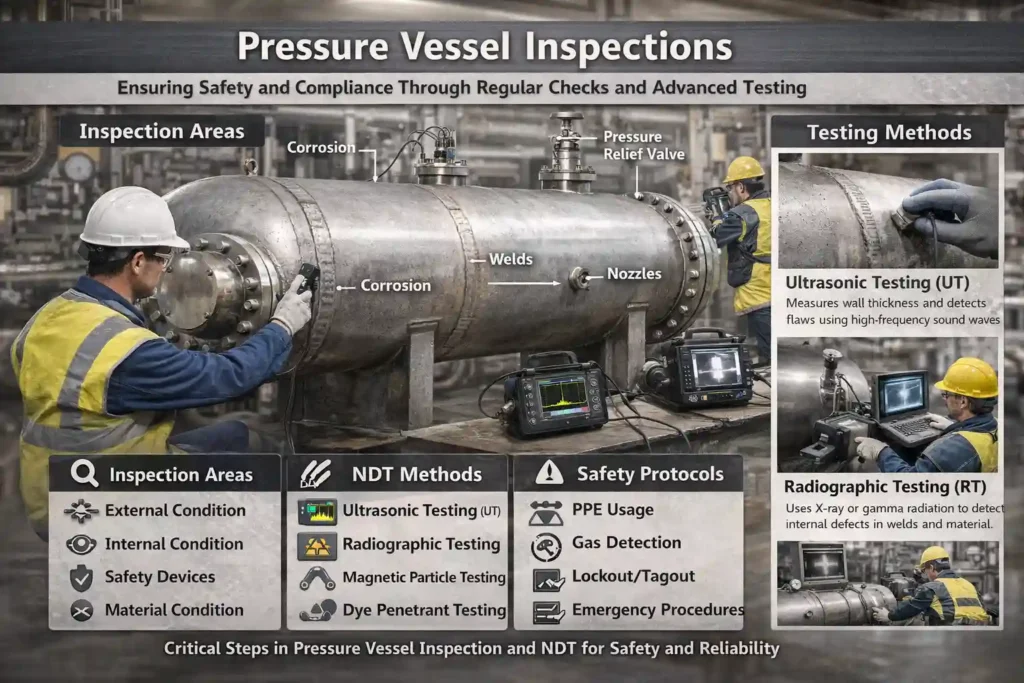
Regular inspections of pressure vessels are legally required and essential for safety, performance, and compliance. This guide explains how often to inspect, what standards apply (like ASME and API 510), the types of testing used (especially NDT), and how inspections reduce downtime and liability. Whether you’re in oil, gas, biogas, or manufacturing this is your playbook for staying inspection-ready.
Pressure Vessel Inspections: Legal Standards, Safety Protocols & Best Practices
Pressure vessel inspections aren’t just regulatory checkboxes, they’re life-saving procedures. Whether you’re in oil, biogas, or manufacturing, understanding inspection requirements ensures compliance, prevents downtime, and protects lives. This guide explains when, how, and why inspections matter based on ASME, API 510, and global codes. If you’re unfamiliar with their purpose or process, here’s a complete breakdown of what pressure vessel inspections involve.
Overview of Standards for Pressure Vessel Inspections.
Understanding the frequency of inspections for pressure vessels and the specific protocols involved is crucial. As a result, at Red River, we align our production techniques with modern inspection protocols and certification standards. Moreover, our vessels are designed to fulfill the rigorous demands of various industries, from oil and gas to biogas, ensuring compliance and peace of mind.
Are Pressure Vessel Inspections Mandatory for All Equipment?
Legal Requirements for Pressure Vessel Inspections
Legal requirements for pressure vessel inspections are non-negotiable in the manufacturing industry. For a full overview of U.S. regulatory standards, see our guide to pressure vessel inspections in the US. At Red River LLC, we emphasize that inspections are not just a best practice; they are mandatory. Understand the ASME Pressure Vessel Codes for more details.
Exceptions in Pressure Vessel Inspection Laws
While inspections are typically obligatory, certain exceptions exist depending on the vessel’s use and jurisdiction. Therefore, at Red River, we are well-versed in these nuances, ensuring your pressure vessels meet all legal standards while advising on applicable exceptions.
Types of Pressure Vessels and Inspection Necessities
Industrial Pressure Vessels: A Closer Look
Industrial pressure vessels, a specialty of Red River LLC, require particular inspection protocols. Our expertise ensures that every vessel is designed and manufactured to withstand the trials of commercial use, meeting all inspection criteria. Explore the four primary head types for pressure vessels.
Inspection Criteria for Different Pressure Vessel Types
Different forms of pressure vessels have varying inspection requirements. Consequently, at Red River, we tailor our manufacturing processes to these specific needs, ensuring every vessel passes inspection with flying colors. We cover this in more depth in our expert guide to pressure vessel inspection procedures.
Frequency of Inspections for Pressure Vessels
Determining Inspection Intervals
Determining the frequency of inspections is critical for maintaining vessel integrity. Red River’s vessels are designed for optimal performance, aligning with recommended inspection intervals for every type.
How often should pressure vessels be inspected?
Most pressure vessels should be inspected every 3-5 years, depending on usage, material, and applicable codes like ASME Section VIII or API 510. Explore factors influencing pressure vessel failure.
Case Studies: Inspection Frequency in Various Industries
Our extensive experience across industries such as oil, fuel, and biogas provides us with unique insights into varying inspection frequencies. Consequently, we ensure compliance and safety in all sectors.
The Process of Pressure Vessel Inspection
Step-by-Step Guide to Inspecting Pressure Vessels
Red River provides a comprehensive guide for examining pressure vessels, ensuring every step is carried out with precision and care. View our guide to inspecting molecular sieves.
Advanced Technologies in Pressure Vessel Inspection
We utilize non-destructive testing (NDT) methods like ultrasonic testing, radiographic testing, and magnetic particle inspection to detect internal flaws without dismantling equipment. These comply with ASME Section VIII and API 510 requirements. Our use of risk-based inspection (RBI) frameworks helps prioritize critical assessments and reduce unnecessary downtime.
Compliance and Certification in Pressure Vessel Inspection
Navigating Regulatory Compliance
Our crew expertly navigates the complexities of regulatory compliance, ensuring every vessel meets the highest standards.
Obtaining and Renewing Pressure Vessel Certifications
Additionally, we assist in acquiring and renewing certifications, ensuring your pressure vessels remain compliant and operational. Explore our guide to pressure vessel material selection.
Safety Protocols During Pressure Vessel Inspections
Ensuring Safety of Inspectors
Safety is paramount throughout inspections. As a result, Red River’s protocols prioritize the well-being of inspectors at every stage.
Risk Management During Inspections
Effective risk management strategies are implemented to mitigate potential dangers throughout the inspection process. Explore the role of risk-based inspection for pressure vessels.
Common Issues Identified in Pressure Vessel Inspections
Wear and Tear: Recognizing the Signs
We educate customers on recognizing signs of wear and tear, a critical aspect of maintaining vessel integrity. Understand common causes of failure in pressure vessels.
Addressing Corrosion and Damage
Moreover, our team specializes in identifying and addressing corrosion and damage, ensuring the longevity and protection of your pressure vessels. Check out our guide on addressing corrosion.
The Role of Technology in Pressure Vessel Inspections
Innovations in Inspection Techniques
At Red River LLC, we embody current innovations in pressure vessel inspection strategies. Consequently, our methods include modern technological advancements, ensuring more accurate, efficient, and complete inspections. For example, from ultrasonic testing to advanced imaging, we leverage technology to enhance the safety and reliability of every vessel.
The Future of Automated Pressure Vessel Inspections
The future of pressure vessel inspections lies in automation. As a result, we are at the forefront of integrating computerized processes, which promise to revolutionize how inspections are conducted. Furthermore, these advancements improve precision while reducing human error and exposure.
Choosing a Pressure Vessel Inspection Service
Criteria for Selecting an Inspection Provider
Selecting the proper inspection provider is crucial. For this reason, we guide our customers through the critical standards, from technical expertise to compliance knowledge, ensuring they make an informed decision.
Red River LLC: Your Partner in Pressure Vessel Safety
As your trusted partner in pressure vessel safety, Red River LLC stands out with complete expertise, cutting-edge technology, and an unwavering commitment to quality and protection.
The Economic Impact of Pressure Vessel Inspections
Cost-Benefit Analysis of Regular Inspections
Regular inspections, though a preliminary investment, play an essential role in preventing costly failures and downtime. Consequently, we provide an in-depth cost-benefit analysis, demonstrating the long-term financial advantages of routine inspections.
Long-Term Savings and Efficiency Gains
Consistent inspections deliver significant long-term financial savings and performance benefits. By identifying and addressing issues early, we help our clients avoid costly maintenance and operational disruptions.
Case Studies: Successful Pressure Vessel Inspections
Real-World Examples of Inspection Benefits
We share real-world examples where successful inspections have avoided potential disasters, saved costs, and ensured uninterrupted operations.
Lessons Learned from Inspection Challenges
Every inspection provides valuable lessons. Therefore, we highlight key learnings from complex inspections, improving our practices and enhancing client knowledge.
Preparing for a Pressure Vessel Inspection
Checklist for Inspection Readiness
We offer a comprehensive checklist to ensure our customers are fully prepared for inspections, addressing all essential components for a seamless process.
Tips for a Smooth Inspection Process
Our professional guidance helps clients navigate the inspection procedure efficiently, minimizing disruptions to their operations.
Legal and Insurance Aspects of Pressure Vessel Inspections
Understanding Liability and Coverage
Understanding the legal and insurance elements is critical. We train our clients on legal responsibilities, coverage, and how routine inspections impact their insurance costs. Discover more about pressure vessel certifications.
Navigating Insurance Claims Post-Inspection
We assist customers in navigating the complexities of insurance claims post-inspection, ensuring they are correctly covered and informed. Understand the mandatory nature of ASME standards.
Environmental Considerations in Pressure Vessel Inspections
Eco-Friendly Practices in Inspections
Environmental responsibility is a priority. We incorporate eco-friendly practices into inspections, aligning with sustainability goals and environmental guidelines.
Addressing Environmental Regulations
We stay up to date with environmental regulations, ensuring our inspections and manufacturing methods meet the latest standards. Explore the significance of environmental regulations in the oil and gas industry.
Training and Qualifications for Pressure Vessel Inspectors
Required Skills and Certifications
Our inspectors are highly skilled and certified, equipped with the expertise to conduct thorough and reliable inspections.
Ongoing Training for Inspection Professionals
Continuous education is essential. We invest in ongoing training for our experts, ensuring they remain at the forefront of industry trends and requirements.
Conclusion: The Importance of Regular Pressure Vessel Inspections
Summarizing Key Takeaways
Regular inspections are essential for protection, compliance, and operational efficiency. Above all, we emphasize the critical role of inspections in maintaining vessel integrity.
Red River LLC’s Commitment to Safety and Compliance
At Red River LLC, our commitment to safety and compliance is unwavering. Finally, we are dedicated to providing premier-tier inspection services, ensuring our customers’ pressure vessels meet the highest standards of protection and performance.
Ready to Ensure the Safety and Compliance of Your Pressure Vessels?
At Red River LLC, we specialize in comprehensive pressure vessel inspections tailored to meet legal standards and industry best practices. Our expert team uses advanced technologies to guarantee your equipment remains safe, operational, and compliant.
Contact us today to schedule your inspection and experience the Red River difference where quality and American values come together to keep your operations running smoothly.
Frequently Asked Questions
1. What is API 510 certification?
It’s a qualification issued by the American Petroleum Institute for professionals inspecting in-service pressure vessels. It ensures inspections meet strict industry standards.
2. How often should pressure vessels be inspected?
Typically every 3–5 years for internal exams, though frequency varies by usage, material, and regulation (e.g., OSHA, AS/NZS 3788).
3. What’s the difference between hydrostatic and NDT testing?
Hydrostatic testing uses water pressure to test strength and leaks. NDT methods (like ultrasonic and radiographic testing) detect internal flaws without harming the vessel.
4. How often should a pressure vessel be inspected?
Pressure vessels should be inspected at least once a year, or more frequently depending on the operating conditions and regulatory requirements.
5. What is the checklist for pressure vessel testing?
The checklist for pressure vessel testing includes inspecting the external and internal conditions, checking for leaks, verifying safety valves, measuring wall thickness, and ensuring proper documentation and compliance with relevant codes.
Key Takeaways
- Inspections are legally required and vital for safety, governed by standards like ASME Section VIII and API 510.
- Inspection frequency varies: Internal (every 3–5 years), External (annually or quarterly), based on use and risk.
- Non-destructive testing (NDT) methods like ultrasonic and radiographic are preferred for precision and safety.
- Risk-based inspections (RBI) help prioritize efforts by assessing critical assets first.
Related Blog Post
Condensate Tanks: Types, Fabrication, and ASME Code
Which Tests Validate Deaeration in Pressure Systems?
Equalization Tanks: Design, Sizing, and Fabrication
What Are Thermal Storage Testing Standards for TES Vessels?
What Hydro Tests Are Required for Pressure Vessels?
- How to Conduct a Pressure Vessel Inspection in Water Treatment Facilities
- Safety Guidelines for Operating Water Pressure Vessels
- Standard Pressure Vessel Inspection Procedures in U.S. Plants
- Non-Destructive Testing (NDT) Methods for Pressure Vessel Safety
- OSHA pressure vessel: Safety Requirements for compliance
- Comprehensive Guide to Controlling Pressure Hazards
About Author