
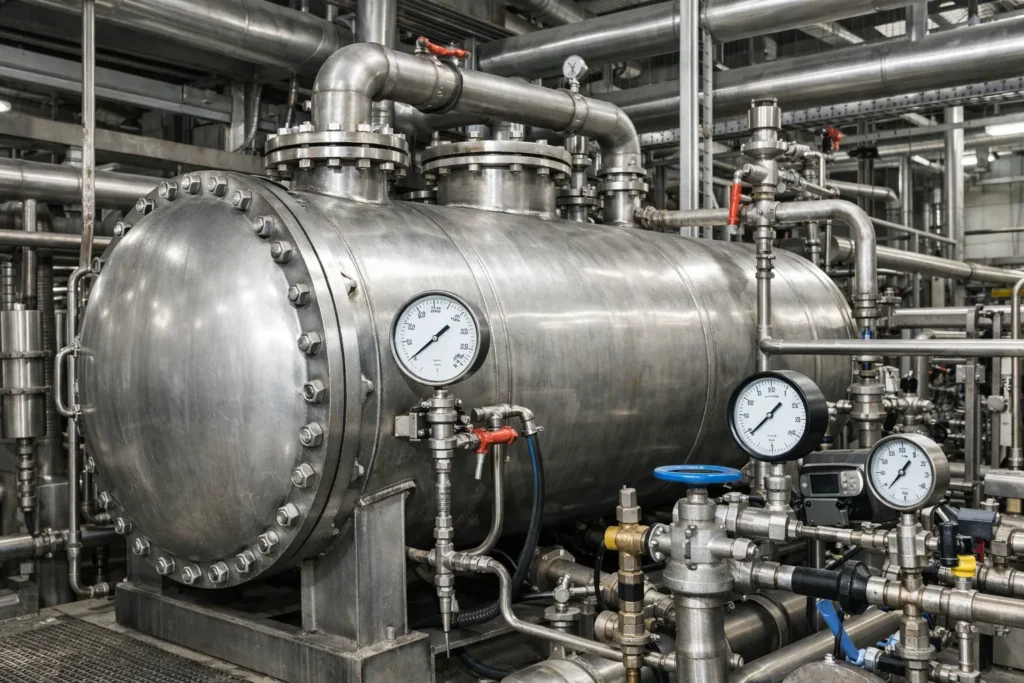
A pressure vessel is a container built to hold gases or liquids at pressures different from normal atmosphere (typically over 15 psi). It’s widely used in oil & gas, pharma, food/bev, and energy because it enables safe, controlled storage/processing but it must follow ASME codes and be regularly inspected and maintained to prevent dangerous failures.
What Is a Pressure Vessel? Key Insights on Its Importance and Safe Operation
If you have ever wondered what is a pressure vessel and whether you need one for your operations, you have come to the right place. Pressure vessels are the workhorses of various industries, from chemical processing to energy production. They let you safely store or transport gases and liquids at pressures much higher or lower than those around you. Good news: learning the basics is easier than you might think. In this ultimate guide, we will walk you through what pressure vessels are, why they matter to your business, how to keep them in top shape, and how to pick a reputable manufacturer in the USA.
What is a pressure vessel
A pressure vessel is any container designed to hold gases or liquids at a pressure significantly different from the ambient atmosphere. Typically, any container rated above 15 PSI (pounds per square inch) qualifies. These vessels vary in size, shape, and application. You might have seen smaller versions at home like hot water tanks while industrial settings use massive, cylinder-shaped vessels that tower multiple stories. Regardless of size, all pressure vessels share a core objective: keep your product under consistent, safe pressure.
For a deeper dive into pressure vessel definitions and thresholds, you can explore detailed technical explanations.
Why pressure vessels matter
Pressure vessels are central to many processes, ensuring that liquids and gases stay at the exact pressure you need. This precision matters when you must store sensitive chemicals, heat or cool substances for future use, or separate mixtures in processes like distillation. For example, heat exchangers are a type of pressure vessel that can help transfer heat from one system to another, letting you reuse waste heat or cool down a product to the perfect temperature. This alone could save you money on energy costs and boost productivity.
Many industries rely on pressure vessels for day-to-day tasks:
Oil and Gas: Storing crude oil or natural gas at carefully maintained pressures. Check out our guide to vapor recovery tower vessels.
Pharmaceutical: Running chemical reactions in controlled conditions to create medications.
Food and Beverage: Preserving products (think carbonated drinks) under high pressure to maintain quality.
Energy Production: Housing high-pressure steam for turbines or other processes. Learn more about pressure vessels in power generation.
A single vessel failure can disrupt supply chains, affect product integrity, and cause safety incidents. Each vessel needs strict adherence to safety and compliance protocols from initial design to daily operation. You never want to learn about a small defect only after it becomes a major hazard. A robust inspection and maintenance framework helps prevent that scenario.
Common designs and shapes
Even though you might picture pressure vessels as simple cylinders, they actually come in a few varieties, reflecting intended pressure ranges and process requirements. Common shapes include:
Cylindrical: The most popular, thanks to their efficient shape and straightforward manufacturing. See most common industrial pressure vessels.
Spherical: Ideal for handling very high internal pressures uniformly but often more expensive to make.
Horizontal or Vertical Orientation: Chosen to fit your available space, product flow, and safety considerations. Learn about horizontal separators in industry.
Each vessel ends with “heads,” such as ellipsoidal or dished heads, contoured for extra strength. Read about the four most common types of heads. Whether you need a vertical design to save floor area or a horizontal model for better stability, your ultimate goal is to keep your contents safely under the specified pressure.
Material Considerations
Selecting the right material is crucial. Common choices include carbon steel, stainless steel, aluminum, and specialized composites. Every material must align with your product chemistry, corrosion risks, and operating temperature.
For an in-depth guide, see ideal material for pressure vessel fabrication.
Leading codes and standards
Navigating regulations ensures your vessel operates safely. In the U.S., the ASME Boiler and Pressure Vessel Code (BPVC) is the gold standard. Section VIII regulates vessels above 15 psig. Division II or III handles extremely high pressures or specific temperatures.
International standards include the Pressure Equipment Directive (PED) in Europe. A vessel meeting ASME guidelines is recognized across markets, ensuring reliable performance. Explore more at demystifying ASME certification.
Compare pressure vessels and tanks
“How is a pressure vessel different from a tank?” you may ask. Tanks usually sit at atmospheric pressure or slightly above, whereas pressure vessels handle substantially higher pressures. Learn more about pressure tanks vs pressure vessels.
Maintain and inspect for safety
Safe operation does not end with installation. Pressure vessels face daily mechanical stress, temperature changes, and potential corrosion. If left unchecked, small cracks can expand, eventually weakening the vessel’s integrity. A 2024 OSHA inspection found that poorly maintained vessels had higher failure rates due to hidden cracks and corrosion under insulation. The cost of a proactive check is far smaller than the downtime and damage from a catastrophic rupture.
Here are some steps you can follow:
- Schedule Regular Inspections: Even if you saw no issues last time, conditions change. You can learn more in how often should a pressure vessel be inspected.
- Use Non-Destructive Testing: Techniques such as ultrasonic or magnetic particle testing spot flaws without opening your vessel.
- Track Operating Conditions: Monitor pressure and temperature daily. Pressure spikes or thermal stress can accelerate wear.
- Train Your Team: Anyone who handles repairs or adjustments should get hands-on training and know procedures by heart.
- Protect Against Corrosion: Coatings, protective linings, or the right alloy can mitigate rust and chemical damage.
For more in-depth guidance, you may explore pressure vessel maintenance or see what is pressure vessel maintenance. Good news: though these steps may sound time-consuming, they become second nature once embedded into your routine. These protective measures keep your vessel in prime condition, saving you money and headaches in the long run.
What Is a Pressure Vessel and Why It Matters
By now, you have a clear sense of what is a pressure vessel, why it plays such a central role in industrial processes, and how safety standards ensure it performs reliably. You have also seen how thorough inspections and quality manufacturing protect your bottom line and your facility’s well-being. When managed well, pressure vessels help you run efficient processes, store essential materials securely, and even recover energy that would otherwise go to waste. In short, a well-chosen vessel, maintained to code, can be a powerhouse in your operations. You are now equipped to make smart decisions for your business’s current and future needs.
Need a reliable partner?
Red River specializes in the design and manufacturing of pressure vessels. We also fabricate related items such as prefabricated spools and skid packages.
Reach out to us today and experience the Red River difference. Where American-made products and American Values come together, we care more.
Frequently asked questions
1. What is a pressure vessel?
A pressure vessel is a closed container designed to hold gases or liquids at pressures significantly different from atmospheric pressure (typically above 15 psi). These engineered vessels feature specific wall thickness, materials, and safety components to prevent failure. Common examples include boilers, air compressor tanks, propane cylinders, and autoclaves. All pressure vessels must comply with safety codes like ASME standards.
2. What are the different types of pressure vessels?
Pressure vessels are classified by:
Shape: Cylindrical (most common), spherical (high-pressure applications), and rectangular
Pressure type: Internal pressure vessels (containing pressurized contents) and external pressure vessels (withstanding vacuum/external pressure)
Application: Storage vessels, heat exchangers, process vessels, and steam boilers
Material: Carbon steel (standard), stainless steel (corrosive environments), and composite materials (lightweight applications)
3. What is the difference between a pressure vessel and a tank?
Pressure vessels operate above atmospheric pressure, require strict engineering codes, specialized safety components, and regular inspections. They’re more expensive due to safety requirements.
Tanks typically operate at atmospheric pressure, have simpler construction, fewer regulations, and lower costs. The key distinction is operating pressure tanks become pressure vessels when designed for pressurized operation, triggering pressure vessel codes and safety requirements.
4. How do I know if my vessel is due for replacement?
Watch for signs like slow leaks, internal corrosion beyond repair, or repeated failures under normal operating conditions. If repair costs keep climbing, investing in a new vessel might be more economical and safer.
5. Can I convert a tank into a pressure vessel?
Typically, no. Tanks are not designed or constructed to withstand high pressure. Retrofitting is rarely advisable or code-compliant. It is safer to get a dedicated pressure vessel built to the right standards.
Key takeaway
- A pressure vessel is any container engineered to hold materials at a pressure that differs significantly from ambient pressure.
- ASME Boiler and Pressure Vessel Code (BPVC) outlines essential safety and design standards for these vessels.
- Common styles include cylindrical, spherical, vertical, and horizontal shapes, each chosen based on space, pressure, and product needs.
- Regular inspections, correct materials, and adherence to safety codes preserve your vessel’s integrity and protect your operations.
Related Blog Post
Can Condensate Storage Improve Reliability?
Where Do Condensate Tanks Fit in a Steam System?
Which Nozzles Simplify Maintenance on Pressure Vessels?
How to Vent Condensate Tanks in Steam Systems
How Do Baffle Layouts Affect Stratification in TES Tanks?
About Author



